


You’ve built a brand that people love. Your operations are tight, your unit economics are screaming “scale me,” and you’re ready to take over the world: or at least the next three states. But then you hit the wall: The Sales Gap.
Who is actually going to sell these franchises?
Do you spend the next six months and a small fortune hunting for a high-level VP of Development to sit in your office? Or do you partner with a franchise development agency that already has the infrastructure, the leads, and the “secret sauce” to start closing deals yesterday?
This is the fork in the road every founder hits. At FranLift, we see this struggle daily. Choosing the wrong path doesn’t just cost you money; it costs you momentum. And in franchising, momentum is the only currency that truly matters.
Let’s break down the “In-House vs. Outsourced” debate so you can stop guessing and start growing.
⭐ The In-House Team: The “All-In” Commitment
Building an in-house sales team feels like the traditional way to scale. You want people who live and breathe your brand, right? You want to see them at the water cooler (or the Slack channel) every morning.
The Pros: Total Cultural Immersion
When someone is a full-time employee, they are 100% focused on your brand. They know the menu, the service, and the “why” behind your business better than anyone else. This level of brand alignment is hard to replicate.
The Cons: The Salary Monster
Here is the cold, hard truth: a rockstar franchise salesperson isn’t cheap. You’re looking at base salaries ranging from $150,000 to $250,000+, plus benefits, payroll taxes, and: often: a demand for equity.
And that’s just one person. You still need to pay for:
- Franchise lead generation tools and software.
- Travel for discovery days.
- Administrative support.
Best For: Massive, enterprise-level brands with 500+ units that need a dedicated department to manage a constant, high-volume pipeline of multi-unit deals.

⭐ Franchise Sales Outsourcing (FSO): The Agile Alternative
Franchise sales outsourcing has shifted from a “backup plan” to the primary strategy for emerging and mid-market brands. Why? Because it offers something an in-house hire can’t: Immediate Speed.
The Pros: Plug-and-Play Infrastructure
When you hire a franchise development agency, you aren’t just hiring a salesperson. You are hiring a system. You get:
- An established CRM and lead-tracking workflow.
- Existing relationships with broker networks and lead portals.
- A team that already knows how to navigate the FDD (Franchise Disclosure Document).
The Cons: Shared Focus
An FSO usually works with multiple brands. While they are experts, they aren’t only yours. However, this is often offset by the fact that they have more “at-bats” and collective intelligence from across the industry than a single in-house hire would.
Best For: Emerging brands (5–50 units) and mid-market players looking to scale rapidly without the massive overhead of a full corporate department.
💸 The Math: Comparing the Investment
Let’s talk numbers. If you’re a founder, you’re likely looking at your bank account and wondering which option keeps your burn rate under control while maximizing your ROI.
| Expense Category | In-House Build | FranLift / Outsourced Model |
|---|---|---|
| Annual Base Salary | $150k – $250k | $0 (Usually a fractional retainer) |
| Benefits & Taxes | 20-30% on top of salary | Included in service |
| Infrastructure/CRM | You build it ($10k+) | Included / Pre-built |
| Recruitment Costs | 20% of first-year salary | $0 |
| Ramp-Up Time | 3–6 Months | 2–4 Weeks |
How much strategic control do you want, and at what price? By opting for Franchise Sales Outsourcing, you can often redirect that six-figure executive salary directly into franchise lead generation: actually putting fuel in the tank rather than just polishing the car.
⭐ The Power of the Fractional Model
At FranLift, we champion the fractional model. Why pay for 100% of a VP’s time when you only need 100% of their results?
Fractional contracts allow you to access “C-Suite” level talent at a fraction of the cost. This flexibility is a game-changer for brands that need to be lean.
- Scale up during peak selling seasons.
- Scale down if you need to focus on operations or site builds.
- No long-term “employment marriages” that are hard (and expensive) to end if performance isn’t there.

🔍 Key Considerations: Infrastructure vs. Messaging
Control of the Narrative
Can an outsider tell your story as well as you can? It’s a valid concern. However, a professional franchise development agency acts as a brand journalist. They interview you, study your strategy, and refine your pitch until it’s a high-converting machine. Often, they can see the “value propositions” you are too close to the business to notice.
Speed to Market
How fast do you need to move? If you hire in-house today, you have to post the job, interview, wait for a two-week notice, then spend 90 days training them. You’re looking at six months before the first “ping” of a lead.
An outsourced partner can often start calling leads within 14 to 21 days. If you’re looking to hit year-end goals, the choice is clear.
⭐ Which One Should You Choose?
Still undecided? Use this quick checklist to see where you land.
Go In-House If:
- You have capital to burn and aren’t worried about immediate ROI.
- Your sales process is so complex it requires a full-time onsite presence.
- You already have 100+ units and a massive internal support staff.
Go Outsourced (FSO) If:
- You want to save $100k+ in overhead and put it toward lead spend.
- You need to start closing deals next month, not next year.
- You want flexibility and don’t want to deal with the HR headaches of hiring/firing sales reps.
- You want to leverage proven strategies used by successful brands.
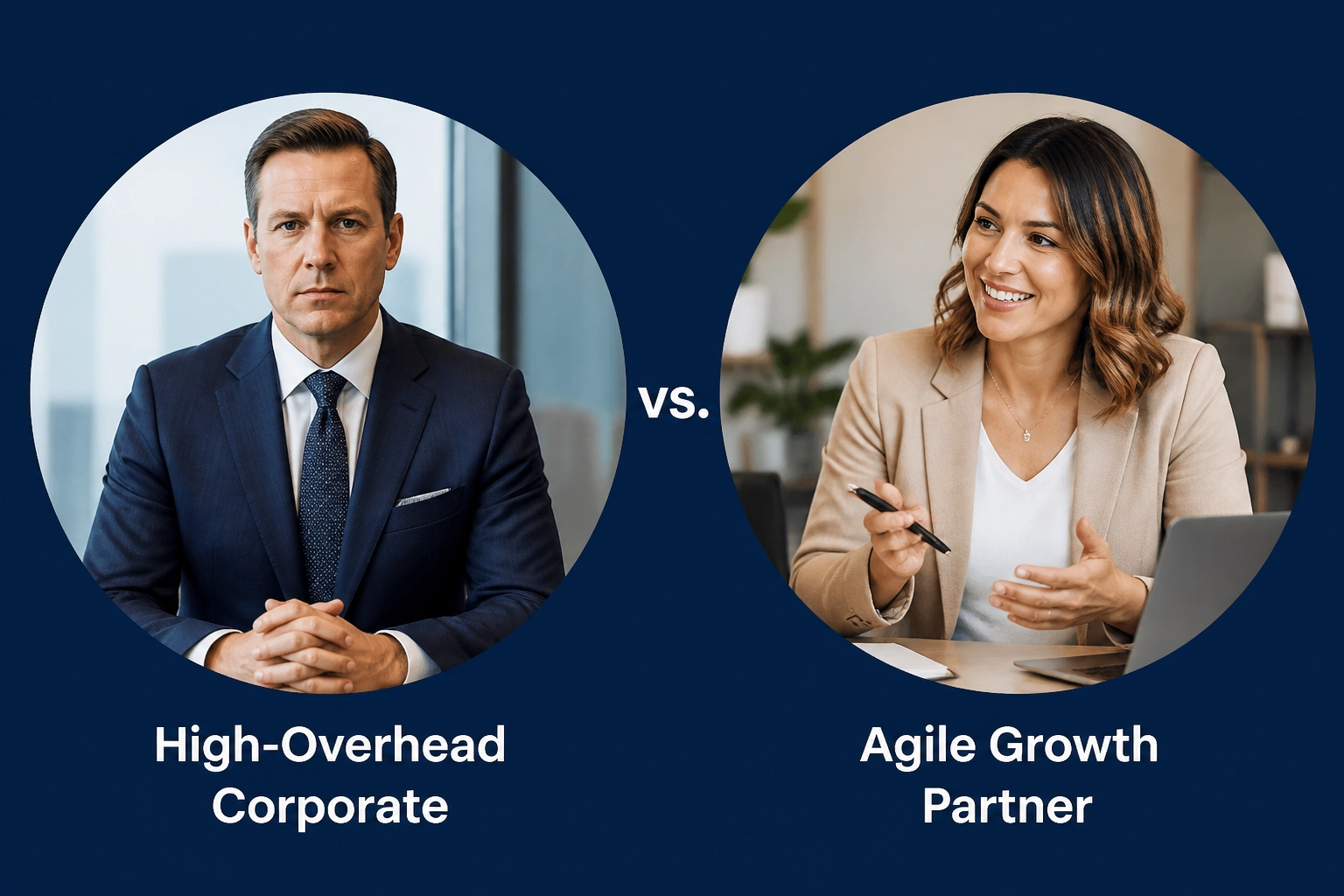
🚀 The Hybrid Future: The Best of Both Worlds
Many of the most successful franchises use a hybrid approach. They start with an FSO to get the first 20–50 units on the board. Once the royalty stream is consistent and the brand is a household name, they slowly transition certain functions in-house.
This “crawl, walk, run” methodology protects your cash flow while ensuring you never miss a growth opportunity. It’s about being strategic, not just traditional.
Are you ready to stop playing HR manager and start being a Franchisor?
The difference between a brand that stays “local” and one that goes “national” is the sales engine behind it. Don’t let your growth goals gather dust while you search for the “perfect” full-time hire. Explore how a flexible, expert-driven model can accelerate your development today.
Refine your approach, drive your leads, and scale your vision. The market won’t wait: and neither should you.
