

If you are waiting for 2027 to arrive before finalizing your expansion plans, you’ve already missed the window for Strategic Growth. The franchise landscape is moving faster than a lunch rush at a high-volume sub shop, and the decisions you make in the final quarters of 2026 will dictate whether your brand is a market leader or a footnote by this time next year. While the economy continues to find its footing, the most aggressive and successful brands aren't just surviving, they are positioning themselves for a massive breakout.
How much strategic control do you want over your brand's future? The reality is that the "wait and see" approach of 2024 and 2025 has been replaced by a "prepare and launch" mandate for 2026. With interest rates stabilizing and consumer behavior shifting toward high-value experiences, the next eighteen months represent a generational opportunity for franchise systems that understand the new rules of the game. From the "Southwest Shift" in territory demand to the sudden IPO-readiness of major players, the roadmap for 2027 is being paved right now.
⭐ The Jersey Mike’s Signal: IPOs and the New Gold Standard
When a brand like Jersey Mike’s makes a move, the entire industry takes notes. With their confidential IPO filing targeting a late 2026 or early 2027 debut at a staggering $12 billion valuation, they are signaling a massive return of investor confidence in the franchise model. This isn’t just about sandwiches; it’s about the Strategic Growth of a system that has mastered unit-level economics and a high-speed development pipeline.
For emerging brands, the Jersey Mike’s trajectory offers a crucial lesson: Scale is no longer just about unit count, it’s about being "public-ready" from day one. Investors in 2027 will be looking for brands that have clean data, high Average Unit Volumes (AUV), and a professional franchise sales organization that can deliver consistent results without diluting brand equity.
Are you building a lifestyle business, or are you building an asset that can stand up to the scrutiny of a Jefferies or Morgan Stanley audit? If you want to ride the wave of the 2027 IPO window, your 2026 objective must be to Refine your internal systems and ensure your franchise development services are operating at a professional level.
⭐ The Southwest Shift and the Southeast Engine
Geography is no longer a matter of "open where you can." In 2027, the geography of franchising will be defined by the Southwest Shift. According to data from FRANdata, states like Texas and Arizona are projected to lead the country with unit growth rates exceeding 2.5%. This migration isn't just about people; it's about capital following business-friendly environments.
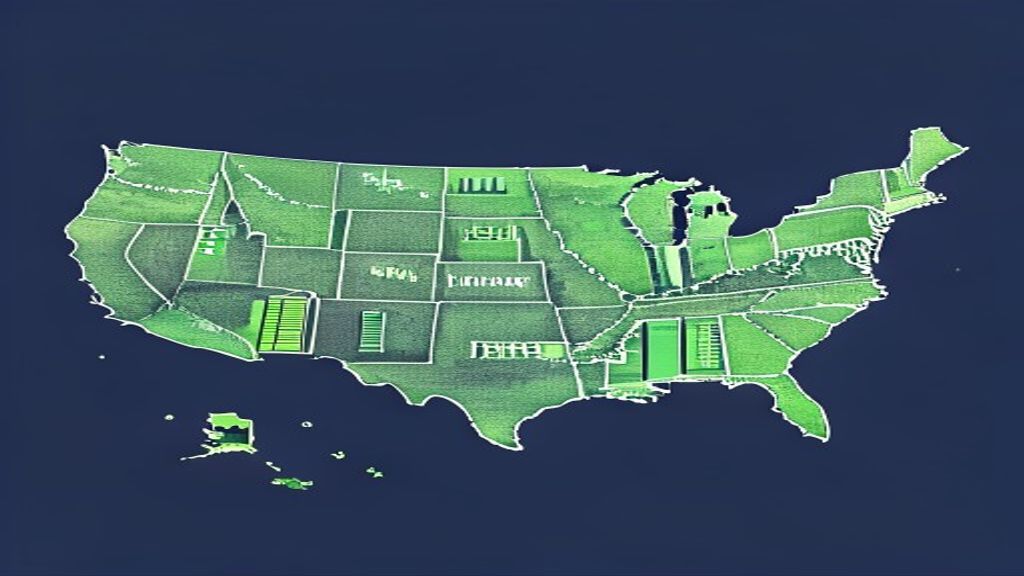
While the Southwest is the fastest-growing by percentage, the Southeast remains the primary engine. Florida and Georgia continue to dominate in sheer volume, accounting for nearly 30% of all new franchise establishments. For brands aiming for Strategic Growth, these regions represent the highest ROI on marketing spend and development efforts.
- Best For Emerging Brands: Target "infill" markets in Arizona and Utah where competition is slightly lower than the saturated Florida coast.
- Best For Established Brands: Deepen your presence in the Texas "Triangle" (Dallas-Houston-Austin) to leverage existing supply chain efficiencies.
⭐ AI-Driven Operations: Moving Beyond the Hype
By 2027, AI won't be a buzzword, it will be the invisible manager in your most successful units. The International Franchise Association (IFA) has highlighted that the brands winning in 2026 are those integrating "Agentic AI" into their core operations. This means AI that doesn't just "chat" with you but actually handles labor scheduling, inventory replenishment, and Strategic Growth lead scoring.
Imagine a system where your franchise sales organization receives leads that have already been scored and nurtured by a custom AI agent, allowing your team to focus only on the highest-quality candidates. This is how brands like Neighborly are staying ahead of the curve. By using first-party data and AI-driven personalization, they are increasing customer lifetime value while keeping acquisition costs flat.
Considerations for 2027:
- Labor Efficiency: Can AI handle your employee scheduling to combat rising wage pressures?
- Lead Quality: Are you still using manual spreadsheets, or are you ready to integrate AI with your sales organization?
- Customer Personalization: Does your tech stack allow for hyper-local marketing that scales?
⭐ The Boom of "Needs-Based" and Child Services
If the 2010s were the decade of the "boutique fitness" craze, 2027 is shaping up to be the era of the Essential Service. High-growth sectors like Child Services and Home Services are projected to grow by 3.2% annually, significantly outpacing the general economy.

Brands under the Neighborly umbrella, like Mr. Rooter or Mr. Electric, are seeing massive inflows of private equity capital at the multi-unit level. Why? Because home repairs aren't discretionary. Whether the economy is booming or cooling, the roof still needs fixing, and the pipes still need plumbing.
Similarly, Child Services (tutoring, enrichment, and specialized childcare) are benefiting from a post-pandemic "recovery" spend where parents prioritize education and socialization over almost all other household expenses. If you are looking for Strategic Growth that is recession-resilient, these "needs-based" sectors are the place to be for 2027.
⭐ Experiential Dining: The Death of the "Generic" QSR
The data for 2026 shows a fascinating shift: for the first time in years, Full-Service Restaurants (FSR) are expected to outpace Quick-Service Restaurants (QSR) in output growth. Why? Because consumers are tired of overpaying for "mediocre and fast." They want an experience.
Brands that succeed in 2027 will be those that offer "Service Theater." Whether it’s a unique store design, a high-touch digital loyalty program, or a menu that feels curated rather than manufactured, the goal is to provide a reason to leave the house. This is a massive opportunity for Strategic Growth in the fast-casual space, provided you have the right franchise development services to find the sophisticated multi-unit operators who can execute that experience.
📈 Planning Your 2027 Launchpad
How do you turn these trends into reality? You don't wait for January 1st. You start the "Fractional Pivot" now. Many brands are realizing that hiring a full-time, $250k-a-year Franchise Development Director is a liability in a shifting market. Instead, they are turning to Fractional models that offer the expertise of a veteran team without the long-term overhead.
The 2026 To-Do List for 2027 Success:
- Audit Your Lead Quality: Stop paying for "cheap leads" that don't close. Focus on quality over quantity.
- Lock in Southwest Territories: If you aren't in Texas or Arizona yet, your competitors will be by 2027.
- Modernize Your FDD: Ensure your Item 19 reflects the resilience and Strategic Growth of your units through the recent economic shifts.
- Adopt Flexible Contracts: Don't get trapped in long-term agency deals. Look for month-to-month flexibility.
The remainder of 2026 is your chance to Accelerate while everyone else is still reading the headlines. Are you ready to lead the pack in 2027?
FAQ: Navigating the 2027 Franchise Landscape
What are the biggest risks for franchise growth in 2027?
The primary risks involve labor availability and wage inflation. Brands that fail to use AI to optimize their labor scheduling will struggle with margins. Additionally, over-saturation in high-cost coastal markets is a real threat, making the "Southwest Shift" essential for sustainable Strategic Growth.
Is now a good time to start a franchise sales outsourcing partnership?
Yes. Because the 2027 market will be highly competitive, you need a professional team to handle your franchise development services before the prime territories are gone. A fractional model allows you to scale up or down based on your 2026 results.
Which states are the safest bets for 2027 expansion?
Texas, Florida, Georgia, and Arizona remain the "Four Pillars." However, watch for emerging growth in Utah and North Carolina, where the cost of living is lower but the population growth is explosive.
Will AI replace franchise development professionals?
No, but it will Drive their efficiency. AI is excellent for lead scoring and administrative follow-ups, but the "human touch" of a professional franchise sales organization is still required to close high-equity deals.
