

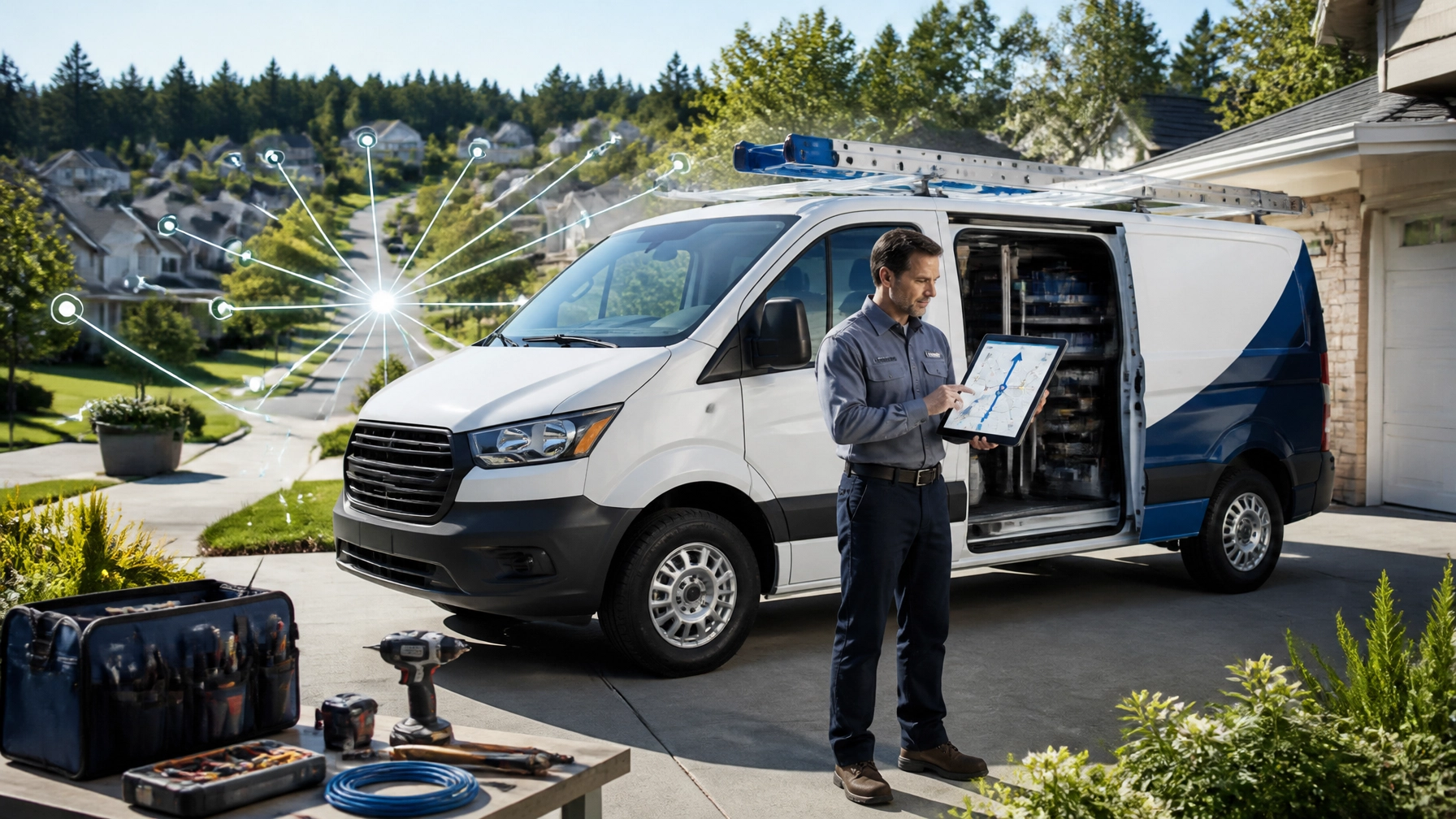
Your service business may have strong demand, loyal customers, and a proven way to deliver results, but growth can still be tied to your personal availability. If every new market requires your direct oversight, you do not yet have a franchise system. You have a successful operation that needs to become repeatable.
Learning how to franchise a business means converting your expertise into a structured model that another owner can operate successfully. For home-based and van-based service companies, that process centers on unit economics, operating consistency, territory design, legal compliance, training, and franchise development.
This tactical playbook shows you how to move from “we have a great business” to “we can scale this business through franchising.”
⭐ How to franchise a business: Start with franchiseability
Before you create an FDD or begin talking with prospective franchisees, determine whether your business can be replicated without you standing in the middle of every decision.
A service-based business is often a strong franchise candidate when it has:
- Consistent customer demand
- A clearly defined service area
- Repeatable sales and fulfillment processes
- A recognizable or differentiable brand
- Documented pricing and service standards
- Reliable vendor and technology relationships
- A path to attractive franchisee-level profitability
- Reasonable startup costs for a new owner
Ask yourself: Could a capable franchisee deliver the same customer experience after structured training and ongoing support?
If the answer depends on your personal relationships, intuition, or technical skill, your first task is not selling franchises. It is refining the system.
Best for: Owners with a proven operating model
This stage is best for owners who have enough operating history to identify consistent performance patterns. A single profitable season is not enough. You want clean financial records, repeatable customer acquisition, and evidence that the model works beyond one unusually strong market.
Consideration: Franchising can accelerate expansion, but it also exposes weaknesses quickly. A process that feels manageable at one location may become a serious support issue across 10 territories. Refine the foundation before you multiply it.
🚐 Choose the right service franchise model
Home-services brands commonly use home-based, van-based, or hybrid operating models. The best choice depends on your service delivery, equipment requirements, staffing needs, and customer expectations.
Home-based model
A home-based model allows the franchisee to manage scheduling, sales, administration, and customer support from a home office while technicians travel to customer locations.
Best for:
- Consulting and inspection services
- Mobile wellness or beauty services
- Cleaning and light maintenance
- Education and enrichment services
- Businesses with limited equipment and inventory
Advantages:
- Lower real estate costs
- Faster territory launch
- Reduced fixed overhead
- Flexible staffing and scheduling
Trade-off: A home-based model still requires professional systems. Franchisees need clear technology standards, secure customer data procedures, branded communication, and a defined workspace expectation.
Van-based model
A van-based model uses branded vehicles to deliver services directly to homes or businesses. It can create strong local visibility while keeping the operating footprint relatively lean.
Best for:
- HVAC and plumbing
- Mobile repair
- Lawn care and landscaping
- Pest control
- Moving, junk removal, and restoration
- Automotive and specialty maintenance
Advantages:
- Visible local marketing
- No traditional storefront requirement
- Efficient territory coverage
- Easier equipment standardization
Trade-off: Vehicle acquisition, maintenance, fuel, insurance, storage, and technician utilization must be built into the franchisee’s investment and operating assumptions.
A hybrid model may be appropriate when franchisees need a small office, warehouse, or training location in addition to mobile service vehicles. The key is to avoid adding infrastructure that does not improve revenue capacity or customer experience.
📊 Build unit economics before building the franchise story
Unit economics are the foundation of how to franchise a business profitably. Prospective franchisees will want to understand not only what they must invest, but how the unit earns revenue, reaches break-even, and produces a return over time.
Track the core drivers of your service unit:
- Average ticket by service line
- Jobs completed per day and per week
- Revenue per vehicle or crew
- Lead-to-booking conversion rate
- Customer acquisition cost
- Technician wages and productivity
- Materials and supply costs
- Fuel, maintenance, and insurance
- Royalty and marketing obligations
- Working capital requirements
- Break-even timing
- Owner compensation and involvement
For example, a van-based repair franchise may depend on three linked assumptions: the number of booked jobs, the average revenue per job, and the gross margin after labor and materials. If the model requires unrealistic utilization to become profitable, the issue must be resolved before launch.
Your FranLift onboarding process emphasizes unit economics because franchise growth depends on a compelling and supportable financial model, not just an attractive brand presentation.
In the FDD, estimated initial investment is generally addressed in Item 7. If you provide financial performance representations, those are typically addressed in Item 19. Work with qualified franchise counsel and financial professionals to ensure your disclosures are accurate and supportable.

The test: Can you explain what drives revenue, what controls costs, and what a well-run unit must accomplish to reach its financial objectives?
If you cannot, keep operating, measuring, and refining. Stronger data creates a stronger franchise opportunity and a more credible conversation with candidates.
🧭 Document the operating system
A franchisee is not buying your personal expertise. They are buying access to a system that helps them reproduce a validated customer experience.
Your operating system should define:
-
Lead management
How calls, web inquiries, referrals, and repeat customers are captured and followed up. -
Scheduling and routing
How jobs are assigned, travel time is controlled, cancellations are handled, and capacity is forecast. -
Service delivery
The required steps, equipment, safety procedures, quality standards, and customer communication for each service. -
Pricing and estimating
How prices are set, quotes are produced, discounts are approved, and change orders are managed. -
Staffing and training
Which roles are required, how technicians are hired, and how performance is evaluated. -
Technology and reporting
The CRM, field-service software, payment tools, dashboards, and reporting cadence franchisees must use. -
Brand standards
Vehicle appearance, uniforms, digital presence, customer reviews, service guarantees, and local marketing requirements.
These standards become the basis of your operations manual, initial training, field support, and quality-control program.

Best for: Businesses that want consistency without excessive bureaucracy
Documentation should make the business easier to operate, not bury franchisees in unnecessary rules. Separate non-negotiable brand and safety standards from local decisions that franchisees can make independently.
Consideration: More standardization protects the brand, but too much rigidity can reduce local responsiveness. Design the system around outcomes, customer expectations, and measurable standards.
⚖️ Complete the franchise development process
The legal and strategic components of how to franchise a business must work together. A typical franchise development process includes:
- Franchise feasibility assessment
- Business and market analysis
- Territory and market planning
- Franchise fee and royalty modeling
- Franchisee profile development
- Operations manual creation
- Training and support design
- FDD and franchise agreement preparation
- State registration, notice, or exemption analysis
- Franchise marketing and sales infrastructure
- Candidate qualification and approval procedures
- Initial franchisee onboarding and launch support
The Federal Trade Commission’s Franchise Rule requires franchisors to provide prospective franchisees with a disclosure document containing 23 specific categories of information. The FDD must be delivered within the required timeframe before a candidate signs or pays, and state requirements may add further obligations.
This is not an area for improvisation. Engage experienced franchise counsel early, and make sure marketing claims, financial discussions, sales materials, and candidate communications follow the approved process.
FranLift’s strategy framework reflects the broader go-to-market work required after the foundation is established: public relations, search engine optimization, referrals, advertising, trade shows, brokers, and other lead sources can work together as part of a layered franchise sales platform.
🤝 When a franchise development agency is the right call
You may be ready for a franchise development agency when:
- Your core business is consuming your leadership team’s attention
- You understand operations but lack franchise sales expertise
- You need a full-cycle development process rather than isolated consulting
- You want to test franchising without immediately hiring a large internal team
- Your brand needs a structured candidate qualification process
- You want to preserve focus on service delivery, marketing, and franchisee support
Best for: Emerging franchisors that need expertise and flexibility
Building entirely in-house gives you maximum control, but it requires recruiting, training, managing, and retaining specialized franchise development talent. It also creates fixed costs before your franchise sales pipeline is predictable.
An agency can provide experienced leadership and sales execution while your internal team stays focused on operations and marketing. FranLift offers full-time and fractional franchise development professionals, manages the complete franchise sales cycle, and works on flexible month-to-month contracts without taking equity in client businesses.

Trade-off: Outsourcing does not remove your responsibility as franchisor. You still own the brand, the franchise system, the legal disclosures, and the franchisee experience. The right partner should operate as an extension of your leadership team, not as a replacement for it.
A selective partner can also help you identify readiness gaps before you spend heavily on market launch. FranLift notes that it works with a small handful of brands at a time, which supports a more customized development relationship.
✅ Your tactical readiness checklist
Before moving into active franchise sales, confirm that you can answer “yes” to most of these questions:
- Is demand strong in markets beyond your current service area?
- Can a new owner learn the model through structured training?
- Are your service procedures documented and measurable?
- Do your unit economics include realistic labor, fuel, marketing, and working capital assumptions?
- Is your territory strategy based on demand rather than arbitrary boundaries?
- Have you selected experienced franchise counsel?
- Can your team support new franchisees after they sign?
- Do you know what your ideal franchisee looks like?
- Is your franchise sales process organized and compliant?
- Have you decided which responsibilities belong in-house and which should be outsourced?
If several answers are “not yet,” that is useful information. Readiness is not a binary label; it is a roadmap for the work required next.
Frequently asked questions
How long does it take to franchise a service-based business?
The timeline varies based on your financial records, operational documentation, legal preparation, state requirements, and internal availability. A business with clean systems and strong unit data can move faster than one still formalizing its model. Plan for a multi-stage process rather than a quick launch.
Is a home-based service business easier to franchise?
A home-based model may have lower startup costs and fewer facility requirements, but it still needs disciplined training, technology, territory planning, and quality control. The model is simpler only when the service delivery and customer experience are genuinely repeatable.
What financial information should you prepare?
Prepare historical profit-and-loss statements, revenue by service line, labor costs, marketing expenses, vehicle and equipment costs, customer acquisition data, and working capital assumptions. Your franchise attorney and financial advisors can help determine what may be disclosed and how it should be presented.
Should I hire employees or use subcontractors in a service franchise?
There is no universal answer. The decision depends on service quality, licensing, insurance, labor availability, customer expectations, and local regulations. Whatever structure you choose, document the standards and economics clearly so franchisees understand their obligations.
When should I contact a franchise development agency?
Contact an agency when your business has a proven model but your leadership team lacks the time, experience, or infrastructure to manage franchise development and sales internally. An early assessment can help you identify gaps before investing in a full market launch.
🚀 Turn a proven service model into scalable growth
The practical answer to how to franchise a business is not simply “create an FDD and find buyers.” It is to build a franchise system that connects sound unit economics, repeatable operations, legal compliance, territory strategy, candidate fit, and ongoing support.
For home-based and van-based service brands, the opportunity is significant: but momentum comes from disciplined preparation. Start by validating the numbers, document what works, choose the right operating model, and determine where specialized franchise development support can accelerate your path.
Ready to evaluate whether your service business is positioned for franchise growth? Connect with FranLift to discuss your goals, resources, and next steps.
