


You brought in the franchise sales organization. You opened the pipeline. The leads started flowing. And then… nothing. Or worse, a trickle of closings that barely justifies the monthly retainer you’re cutting to that franchise development firm.
Here’s the uncomfortable truth: if your FSO isn’t closing deals, the problem probably isn’t your FSO. It’s your foundation.
Too many franchisors hire a franchise sales organization expecting miracles without asking whether their system is actually ready to sell. They assume that outsourcing the sales function means outsourcing the accountability for growth. It doesn’t work that way. In 2026, candidates are more sophisticated, capital is tighter, and the market has zero patience for half-baked concepts wrapped in slick sales decks.
Let’s talk about why deals aren’t closing, and what you can actually do about it.
The Real Problem Isn’t Your Sales Process
Most franchise brands obsess over pipeline metrics. How many Discovery Days did we book? How many FDDs went out? What’s our conversion rate from portal lead to signed agreement?
Those numbers matter. But they’re symptoms, not diagnoses.
The core issue isn’t that your franchise sales outsourcing partner isn’t dialing enough or following up fast enough. It’s that the foundation of your franchise system has cracks, and when candidates start asking real questions, those cracks become craters.
 No sales organization, no matter how talented, can close a deal when the brand story doesn’t hold up under scrutiny. And in 2026, candidates scrutinize everything.
Four Barriers Your FSO Can’t Overcome for You
1. Weak Proof Points
Candidates don’t buy your projections. They buy your operators’ reality.
If you only have one location performing well, or worse, if your existing franchisees won’t validate your claims, you’re asking your FSO to sell vaporware. A sophisticated buyer will ask to speak with operators in three different markets. If you can’t deliver that conversation convincingly, the deal dies on the validation call.
Your fractional franchise development team can script the pitch perfectly, but they can’t manufacture credibility you don’t have. Proof points are built over time, with operator success that spans geographies and market conditions. If you’re trying to scale before those proof points exist, you’re not ready for an FSO, you’re ready for patience.
2. Understaffed Support Infrastructure
Here’s what happens when growth outpaces operational readiness: candidates sense it.
They ask about onboarding timelines and hear vague answers. They request field support details and get generic platitudes. They want to understand how quickly they’ll get help when things go sideways, and they realize your corporate team is already stretched thin supporting five locations, let alone fifty.
A good FSO will expose this weakness faster than you can hire around it. That’s not a bug; it’s a feature. If you can’t support the franchisees you already have, flooding the pipeline just accelerates your brand’s reputational collapse.
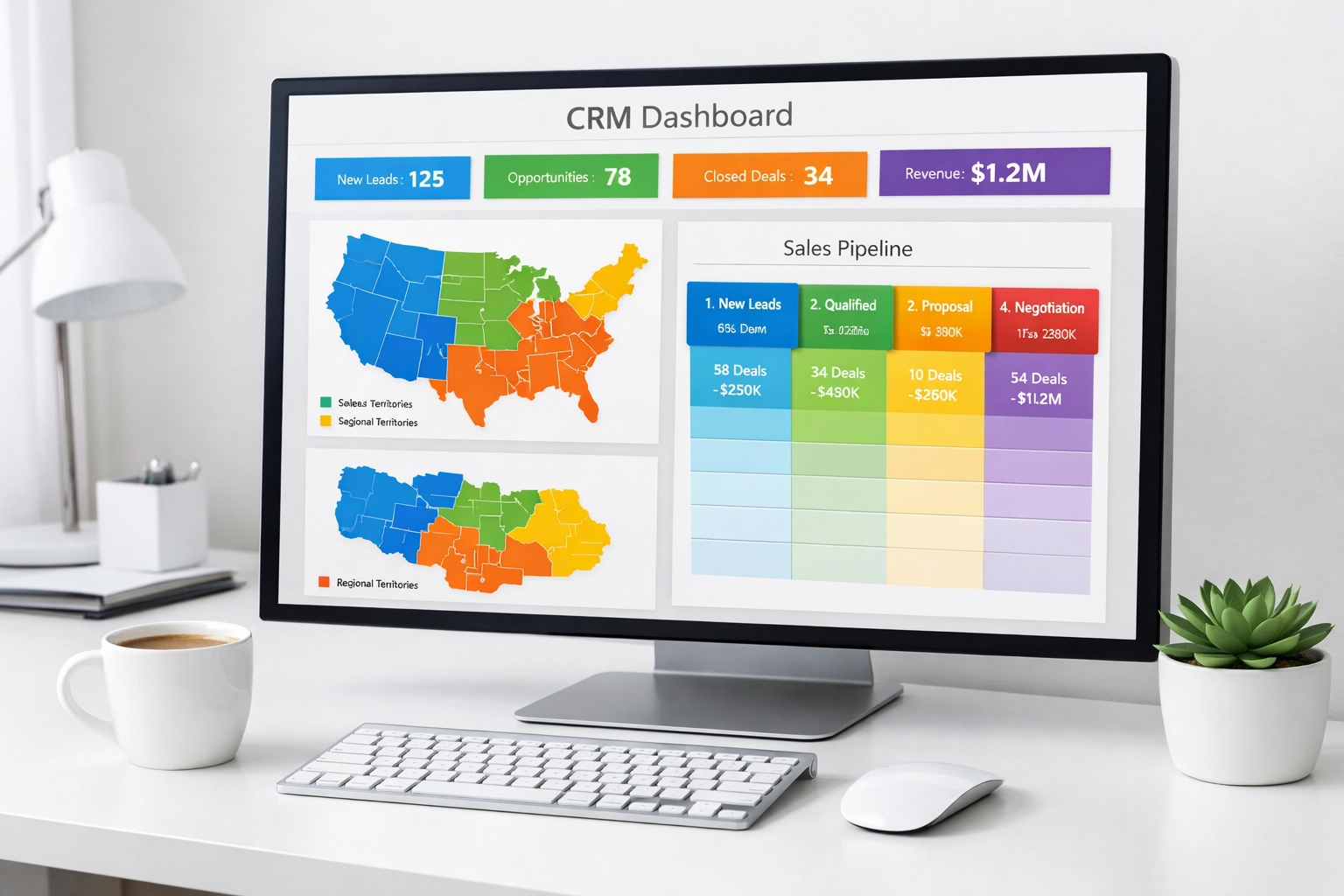
 3. CRM Chaos and Territory Confusion
Let’s get tactical for a second.
If your CRM is a mess, duplicate leads, unclear territory assignments, no systematic follow-up, your FSO inherits that chaos. They’ll spend the first three months cleaning up data instead of closing deals. Same goes for poorly defined territory rules. If candidates don’t know what they’re actually buying geographically, or if your brand has competing claims on overlapping markets, no sales professional can navigate that minefield without casualties.
Emerging franchisors often skip the operational basics. They assume the FSO will “figure it out.” That’s expensive magical thinking. Your franchise sales organization should be focused on candidate education and deal closure, not building your infrastructure from scratch.
4. Speed vs. Sustainability Misalignment
In 2024 and 2025, cheap capital created a land-grab mentality. Brands pushed volume. FSOs optimized for speed. Candidates got swept into agreements before they fully understood what they were buying.
2026 is different. Capital is expensive. Candidates have seen enough cautionary tales to slow down. They want honest conversations about challenges, not just highlight reels of your best performer’s Instagram feed.
If your sales system prioritizes speed over education, if you’re still trying to rush candidates through Discovery Day and into an FDD before they’ve done the mental work, you’ll lose to competitors who respect the decision-making process. Good franchise sales outsourcing in 2026 means building trust, not urgency.
How to Actually Fix This
Start with a Diagnostic
Before you fire your FSO or hire a new one, answer these questions honestly:
- Do you have proof points in at least three different markets?
- Will your existing franchisees confidently validate your brand story to strangers?
- Can your support infrastructure handle 10 new openings in the next 90 days without breaking?
- Are your CRM, territory rules, and documentation clean enough that a new partner can start selling immediately?
If you answered “no” or “maybe” to any of those, you don’t need a new sales partner. You need operational triage.
 Build Systems That Support the Sales Narrative
Franchise systems in 2026 aren’t just selling a concept: they’re selling an ecosystem. CRM integration, marketing automation, scheduling tools, vendor partnerships. These aren’t nice-to-haves; they’re table stakes.
Candidates evaluate operational maturity. When they see a brand that’s built thoughtful systems around every aspect of the franchisee journey, they trust that the support will be there when they need it. When they see duct tape and optimism, they walk.
Shift Your Sales Story to Sustainability
Stop leading with unit sales volume. Start leading with lifetime value, membership revenue, and semi-absentee viability.
In 2026, sophisticated buyers care about predictable, recurring cash flow. They want to understand how your model generates stability, not just how many locations you sold last quarter. If your pitch deck is all growth curves and expansion maps, you’re speaking the wrong language.
This is especially true if you’re working with a fractional franchise development team. They need a story that resonates with business buyers who’ve done this before: not first-time entrepreneurs chasing a dream.
Reframe What Your FSO Actually Does
The role of a franchise development firm has fundamentally shifted.
It’s no longer just about filling the pipeline and booking Discovery Days. It’s about managing the entire candidate journey: education, validation, honest conversations about risks, and setting realistic expectations. That takes time. It requires systems that support depth, not just speed.
If you’re evaluating an FSO based purely on how many FDDs they distribute per month, you’re measuring the wrong thing. The better metric is how many franchisees are still operating successfully 18 months post-opening. That’s the outcome a great sales organization optimizes for.
 Go Omnichannel with Your Development Strategy
Candidates don’t just show up on Franchise.com anymore. They research across AI tools, broker networks, Reddit threads, LinkedIn groups, and referral conversations. Your franchise sales strategy needs to meet them everywhere they look: with consistent positioning, honest messaging, and systems designed to convert interest into qualified conversations.
That’s not your FSO’s job alone. That’s a coordinated brand effort that requires marketing, operations, and sales working in lockstep.
What This Means for 2026
If your franchise sales organization isn’t closing deals, don’t blame the closer. Look at what they’re being asked to close.
The brands winning in 2026 aren’t the ones with the slickest pitch decks or the most aggressive Discovery Day calendars. They’re the ones who built something real: proof points that hold up, systems that scale, support infrastructure that works, and a sales narrative rooted in sustainability instead of hype.
Franchise sales outsourcing can accelerate growth, but only if there’s something worth accelerating. If the foundation is shaky, hiring an FSO just means you’ll fail faster and more expensively.
At FranLift, we’ve seen this pattern repeat across dozens of brands. The ones who succeed don’t outsource accountability: they outsource execution, after they’ve done the hard work of building a system worth selling. If you’re ready for that kind of partnership, let’s talk about what actual franchise development strategy looks like when it’s done right.
Because in 2026, closing deals isn’t about working harder. It’s about being ready.
